Retail futures traders often suspect the market is being pushed around. Sometimes it is, and some of it leaves traces in the order book. But a trader looking at a ladder can only ever see possible manipulation, never proof. This article covers what the common patterns look like, what the rules say, and how to trade sensibly around them without turning every move into a conspiracy.
What counts as manipulation
In US futures markets, spoofing is defined in law. The Dodd-Frank Act of 2010 amended the Commodity Exchange Act to prohibit bidding or offering with the intent to cancel the order before execution. CME Group's Rule 575 also prohibits disruptive practices, including orders entered with the intent to cancel them before they trade.
Notice the word intent. Cancelling orders is completely normal; most resting orders are cancelled eventually. What makes it illegal is why it was placed, and that is something only investigators with full account data can establish.
Patterns you may see in the book
Spoofing
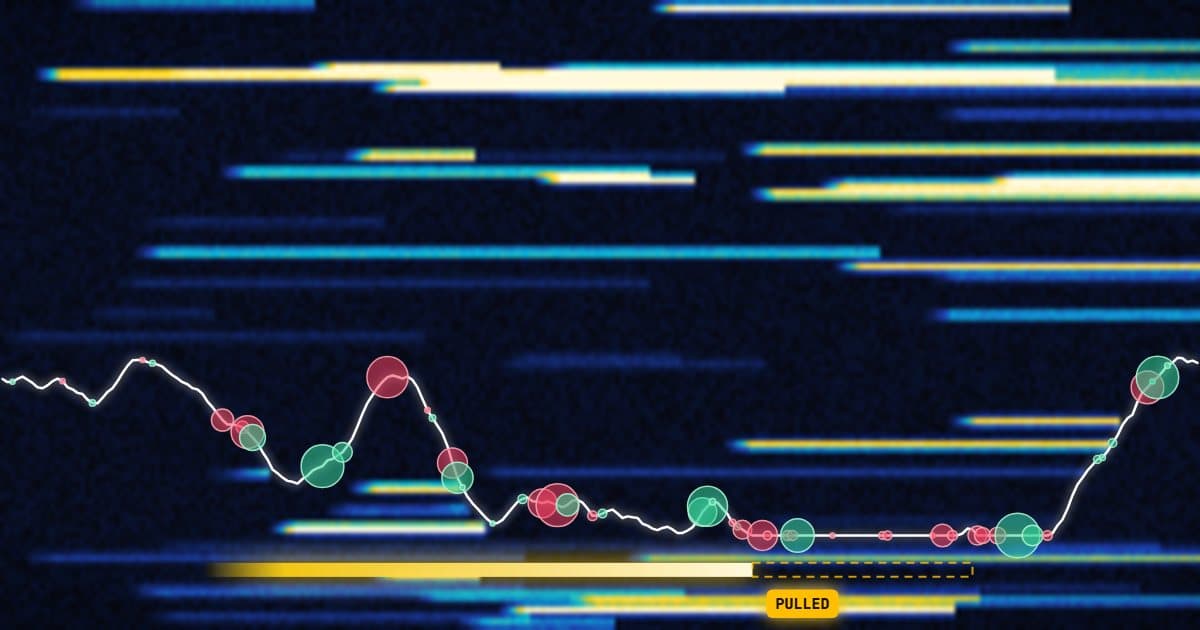
A large order appears on one side, away from the touch, giving the impression of support or resistance. As price approaches, it disappears without trading. Meanwhile, the real business happens on the other side.
Layering
Several orders stacked on consecutive levels, creating a thick wall of apparent size, which is pulled together once it has done its job.
Flickering size
An order whose size jumps up and down repeatedly, or that keeps being added and removed. It makes the book look busier and more one-sided than it is.
What you cannot see
Many forms of misconduct, such as wash trades between related accounts or coordinated activity across markets, leave no recognisable trace on a single ladder. Do not assume the book tells you everything.
What a retail trader can reasonably infer
- Can: that a large order was pulled without trading, how long it lived, whether price had approached it, and what traded while it was there.
- Cannot: who placed it, why, whether other accounts were involved, or whether any rule was broken.
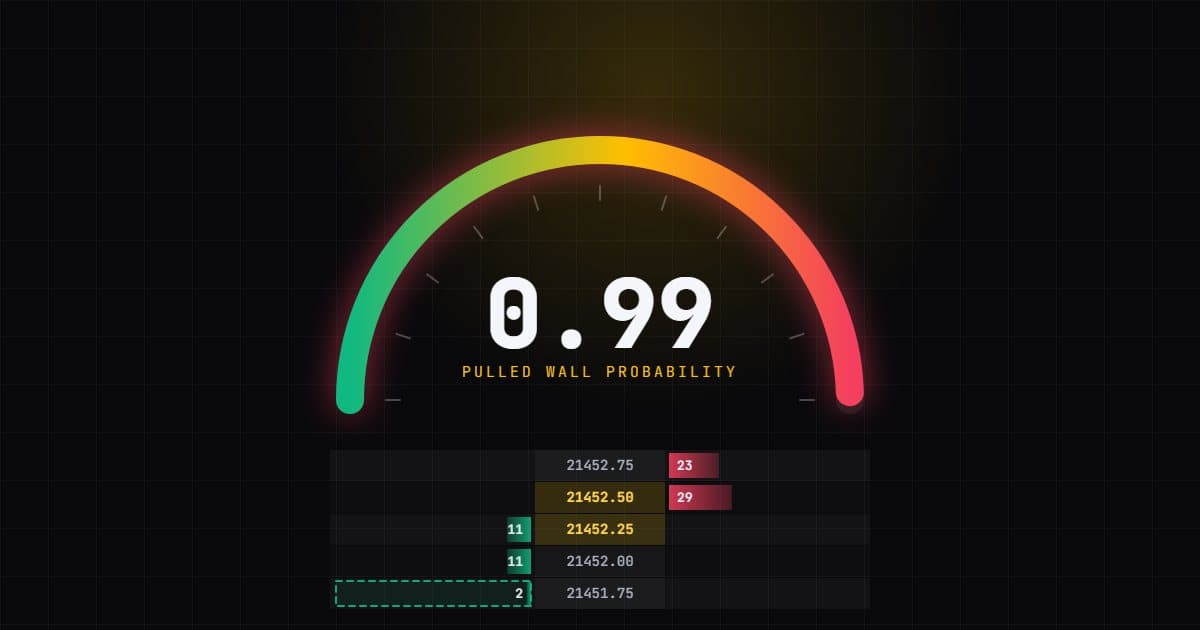
Tools that score this behaviour, like the Pulled Wall spoof probability in Vantedge BookScope and BookPilot, work within those limits. The score runs from 0.0 to 1.0, rising when a wall was approached, short-lived, frequently resized or accompanied by opposite aggressive volume. It is a probabilistic diagnostic, not a legal determination.
Protecting your own trading
The practical question is not "was that illegal?" but "should I trust that size?" A few habits help.
- Do not lean on displayed size. Placing your stop just behind a big wall assumes the wall will still be there. Size that can vanish in a second is not protection.
- Wait for the approach. A wall that holds and trades when price reaches it tells you far more than one sitting several ticks away.
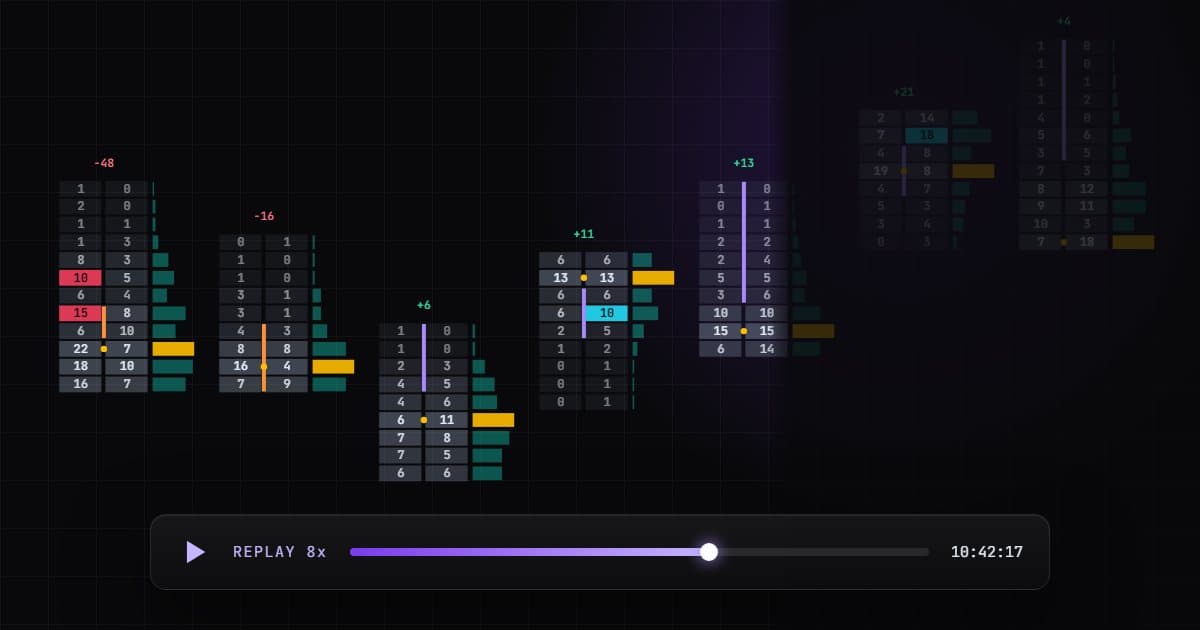
- Weight trades over quotes. Executed volume cannot be cancelled. The footprint and delta show what actually happened.
- Treat sudden book shifts with caution. If a lopsided book flips quickly, the earlier imbalance may not have been real.
How the Vantedge strategies build this in
Both habits above are written into Vantedge BookPilot. Its Pressure Break signal, which trades book imbalance, is vetoed while the book's spoof score is 0.6 or higher, so it does not chase pressure that is probably fake. Its Pulled Wall signal takes the opposite stance: when a wall is pulled with a spoof probability above Fire Probability, it fades it.
If you would rather avoid the order book altogether, Vantedge FlowPilot trades only executed volume: stacked imbalances in the footprint, with a check that bar delta agrees. The comparison page sets out the two approaches.
If you think you have seen real misconduct
Regulators accept tips. In the US, the CFTC has a whistleblower office and accepts tips through its website. Keep your notes factual: instrument, time, what you saw. Do not assume your interpretation is the full picture.
Whether or not the book is being gamed, the risk of trading futures is yours to manage. Test any order flow approach in SIM, and in Market Replay where Level 2 is involved, before using it on an evaluation, funded or live account.